Home - Page 14 1 2 12 13 14 15 16 1,844 1,845

The 1966 coup and the Macbeth tragedy, By Festus Adedayo

Columns

Chief Richard Osuolale Akinjide, Minister of Education in the First Republic, under Tafawa Balewa, and Minister of Justice under Alhaji Shehu Shagari, and one of the most brilliant lawyers ever in Nigeria, stood before Justice Olujide Somolu. Somolu was Chief Justice of the Western State. Akinjide was a known Samuel Ladoke Akintola sympathizer and a staunch member of the NNDP in the Western Region. The Brigadier General Robert Adeyinka Adebayo government of the Western State had set up an inquiry into the running of the First Republic. In doing this, tt established the Somolu Tribunal in 1967. Though officially known as the Tribunal of Inquiry into the Assets of Public Officers and Other Persons in the Western State, it was a judicial commission to investigate the assets of politicians, public officers, and officials of the former Western Region.

Akinjide stood as counsel to J. O. Adigun, Minister of Lands in the Akintola government. Adigun was one of the five founders of the Action Group who later went apostate, de-linking from the Awolowo group. He gave evidence on his acquisition of nine properties, five of which were Crown lands. The proceedings received adequate projection in the newspaper press of the time. Two stories on this proceeding were published on the front page of the Tribune newspaper of 20 October, 1967 with the titles, Policy maker: ‘Adigun held 5 crown plots’ and ‘This probe will serve a lesson.’

Akinjide then stood up to respond to allegations of Adigun’s multiple ownership of Crown Lands. There was absolutely nothing wrong with somebody acquiring more than one Crown land, he told Justice Somolu. He then quoted from Shakespearean Macbeth where it was said, according to him, that “every man is ambitious to enrich himself.” Akinjide was obviously referring to Act 4, Scene 3 of Macbeth where, while testing Macduff, Malcom had described the “stanchless avarice” (limitless greed) he claims to possess to see if Macduff is loyal to Scotland. Malcom  had said, “And my more-having would be as a sauce/To make me hunger more; that I should forge/Quarrels unjust against the good and loyal,/Destroying them for wealth.

Justice Somolu had an instant reply to Akinjide. He had said curtly, “But tragedy was the end of Macbeth!” That tragedy seems to be the defining end of military rule in Nigeria, as well as its civilian equal who now rule Nigeria.

Details of Adigun’s lands and property acquisitions in Lagos, Ibadan and Ogbomoso, which ran into several thousands  of pounds were published in AG-sympathetic newspapers. They were ostensibly published to buttress the claim that the Akintola government was replete with ministers and officials who enriched themselves at the expense of the public.

On the morning of 15 January, 1966, the five, now famous, young and idealistic Majors in the Nigerian Army — Kaduna Nzeogwu, Emmanuel Ifeajuna, D Okafor, CI Anuforo and Adewale Ademoyega — executed their planned first military coup in the country. In his coup speech, Nzeogwu said the coup plotters had slated for elimination the “ten-percenters, homosexuals and feudal lords”. If the dry bones of Nzeogwu could look back today, he would be sorry to have killed Nigeria’s patriarchs of saints. Those in power today abhor percentages. They steal in totality. Nigeria’s rulers today are neither homo, bi, nor hetero in their sexual fascinations. They have conquered all the sexes. Their political footstools have gone beyond fiefdoms. The hearts of Nigerians are firmly padlocked, swallowed, and now swimming in the deep oceans of their belies.

With the assassination of Sylvanus Olympio on 13 January, 1963 in Lome, then Togoland, now Togo, making him the first civilian president victim of a wave of military coups that would soon sweep across Africa in the 1960s, Nigeria, its neighbour, should have trodden the earth with greater circumspection. Didn’t our elders say, the whip a wife-beater husband administered on his older wife, kept securely on the rafters, is reserved for his most recent consort?

Last Thursday, stumps in place of arms, eye for eyes, healed scars of holes dug by gun pellets, and long, sorrowful faces signposted Nigeria’s long walk through a scorching desert of military rule. As symbolic wreathes were laid in memory of fallen soldiers, 15 January afforded Nigeria opportunity to assess the green khaki, the black jackboots and the oppressive berets of soldiers. As my people say, when a child falls, it looks far ahead of him; perhaps, a wraith Mother talked fearfully about in folklore, had caused the fall? However, when an elderly falls, they look backwards to assess the tottering steps that landed them in an embrace with the brown, coarse belly of Mother Earth. The comparative hopelessness of civil rule today puts the grim reality in perspective.

For about 28 years, including the few months of diarchy experimented by General Ibrahim Babangida, Nigeria was under the suffocating grips of military rule. Till today, opinions are divided on whether military rule, with its novel hijack of political power on 15 January, 1966, was downright evil. Or, was it an ambivalent mixture of good and bad? Or, simply put, a desirable phenomenon for Nigeria’s development?

As Professor Eghosa Osaghae wrote in his book, The Crippled Giant: Nigeria Since Independence, (1998) the military phenomenon is central to any analysis of Nigerian politics today. Young, ambitious military officers have always cited imbalances in the polity as alibi for their strikes. The national crises of 1964 and 1965 census exercise, the economic crises of the Shehu Shagari government, the collapse of the First, Second Republics and the stillbirth Third Republic, as well as other fractures in the political system, have always come before military interventions. This unbroken chain has made many analysts describe military rule in Nigeria as continuation of politics by military means.

The 15 January, 1966 coup was a bloody, fierce, definitive and watershed turn-around in the annals of the history of Nigeria. It took the lives of 22 people, including the prime minister.

By 1966, there were three elephants in the Nigerian room. They were tribalism, nepotism and corruption.  It must be borne in mind that this triad ills, the elephants that the Five Majors claimed necessitated their strike, represented a euphemistic appraisal of the ills that plagued the First Republic.

In the Western Region, the coup received popular supports, especially from majority of United Progressive Grand Alliance (UPGA) supporters who saw it as a government that had come to rescue the region from Akintola’s NNDP. The perceived ethnic colour of the killings riled the north, leading to the second retaliatory coup in July of the same year. The anger against the coup was palpable. First reason behind the North’s anger was the ethnic pattern of the killings. Its major political leaders, indeed its two most powerful politicians, Prime Minister Balewa, as well as Premier, Ahmadu Bello, and its leading military officers, were killed.

Second was what the North saw as the exuberant air of conquest displayed by Igbo residents in the North after the coup. The one that riled the north most, and which compounded its anger, were posters that appeared in some parts of the North showing Nzeogwu standing on the fallen corpse of the Sardauna. The third prong of disaffection for the government of Major General Johnson Aguiyi-Ironsi, who took over after the coup, and his ethnic stock. The fourth reason why the North’s anger was propelled was that Aguiyi-Ironsi was perceived as displaying suspicious actions, post-coup.

For instance, the 1966 Unification Decree, otherwise known as Decree No 34, put a wedge on Nigeria’s strut into development. In the words of Billy Dudley, in his Instability and Political Order: Politics and Crisis in Nigeria (1973), Ironsi, though genial and convivial, was not perceived to be an intelligent man. This affected his perception of issues as the military head of the country. It was worsened by perception that Ironsi surrounded himself with Igbo bureaucrats, who acted as catalysts for Igbo-centered appointments. Even when Ironsi announced that governmental measures, including the unitarisation of the country, were merely transient, and set up the Constitutional Review Study Group headed by Chief Rotimi Williams, the Commission for the Unification of Civil Services, headed by Mr F Nwokedi, as well as the Economic Committee under Simeon Adebo, the North, already incensed by these policies, was not placated. It led to the pogrom in the North against Igbo, and Ironsi’s abduction and killing in Ibadan. The general state of anomie in the country was the tinder that eventually incinerated Nigeria.

Western Region was however generally happy with the coup and counter-coup. As the Nigeria-Biafra war raged, the war of politicians of the rested First Republic, spread like bush fire in the harmattan. Apparently confirming the Nzeogwu coupists’ allegation of massive corruption in that Republic, the new military administration set up the Somolu tribunal to investigate allegations of corruption and illegal acquisition of wealth by politicians of the First Republic. The major purpose of the commission was to uncover illicit enrichment and recover public assets. It acted under the Public Officers and Other Persons (Investigation of Assets) Edict No. 5 of 1967. The tribunal discovered that many public officers improperly acquired illicit wealth. It subsequently ordered the forfeiture of substantial assets that included lands, houses, bank accounts to the Western State Government. The findings and orders of the Somolu Tribunal led to widespread forfeiture of properties.

Mrs. Faderera Akintola, wife of the late Premier, had her ample share of the riposte. Faderera was a fierce woman reported to always have a pistol in her handbag. She was the woman Awolowo reported in his autobiography, during the swearing-in of Sikiru Adetona as the Awujale of Ijebu on 2 April, 1960, as complaining about how a rude crowd of party supporters was shouting “Up Awo!” at Akintola’s appearance in Ijebu-Ode for the Awujale installation. Akintola, said Awolowo, had promised his wife that he would rid the region of the name “Awo” in six months. Some persons also alleged that Faderera, nee Awomolo, of Igbajo in current Osun State, believed in an eye for an eye. One day when he suggested the rout of a political opponent, Akintola was reported to have grimaced and said, “Faderera, you don’t even know more than elimination! If we eliminate this, eliminate that, who else would we administer in the region?”

So, on her day before the Somolu tribunal investigating the Wrought Iron (Nig) Ltd., a company in which she was alleged to have purchased shares worth £22,636 in the name of ‘Aibinu Omotara,’ Faderera was grilled. On 13 September, 1967, the headline of one of the stories in the Nigerian Tribune newspaper was, “I lost my husband, yet…’: Akintola (Mrs) sobs at probe”.

Some members of the Akintola government were also tried by the tribunal. The major headline of the Tribune of the same 13 September was, Juju display at assets probe. It was some celebration of the collapse of the erstwhile rulers of the West. Newspapers also devoted front pages to scintillating stories that erupted from the Somolu tribunal. When Oba Claudius Akran, former Minister of Finance under Akintola, appeared at the tribunal, his statement made the front page of the Tribune’s edition of 16 September, 1967. It was, I didn’t know it’s govt money: Akran takes turn. The story painted Akran as a patently corrupt man who acquired several thousands of pounds in assets, property and savings which were “above his legitimate income between 1960 and January 1966.”

On 21 October, 1967, Oba Akran again came under focus, having attended the Somolu tribunal the previous day. From the sublime, to the hilarious and humorous, the complicity of the Akintola NNDP-led government in the morass that eventually came upon the Western region was feasted upon by newspapers that were sympathetic to the defunct AG. In one of its front page stories with the title, “Account Akran’ll give in heaven” (21 October, 1967, Nigerian Tribune), the newspaper reported verbatim the cross-examination sessions between Akran and the counsel to the tribunal, an account which though hilarious, brought out the complicity of Akran in the huge theft of the region’s money. Stolen money was alleged to be about £2million. In another front-page story on the tribunal which was entitled, Akran says, I dealt in £ thousands, the former Finance Minister said he never dealt in any amount that was less than £1,000. In the midst of very poor people, this report was almost tantamount to casting leprosy on a public figure.

The lead story of the Tribune of 7 February, 1968, still reporting the Somolu tribunal, was the arrest of the Western region Minister for Works and Ports, Chief Adebiyi Adeyi. He was said to have been arrested for having the sum of £73,000 in his custody. A screaming headline, £73,000 funds in private pocket: Adeyi in custody, as well as another one underneath it entitled, Lakanmi sheds tears, were published in the Tribune of 7 February, 1968. Mr. Emmanuel Lakanmi was the Chairman of the Western Region Housing Corporation and Justice Somolu had issued a bench warrant for his arrest for contempt of the tribunal.

However, the Somolu tribunal’s actions were heavily contested in court. They resulted in landmark legal cases which interrogated the untrammeled powers of the military government over the judiciary. One of them was the Lakanmi v. AG Western State which ran up to the Supreme Court in 1970. In this landmark case, Chief Lakanmi challenged the forfeiture of his assets.

However, seeing that the judiciary was going to rout its unquestionable powers, the military promulgated the Decree No. 45 of 1968, so as to curb legal challenges to its powers. It promulgated the Forfeiture of Assets, etc. (Validation) Decree No. 45 of 1968 which essentially validated the actions of the tribunal. It overrode court decisions. When it got to the Supreme Court, it almost led to a constitutional crisis, with the court initially holding that the Decree was invalid. However, the military government responded with the Federal Military Government (Supremacy and Enforcement of Powers) Decree 1970In it, the military held itself as running a revolutionary government which had supreme powers. This effectively ended the challenge.

The 1968 Somolu Tribunal has however remained a watershed in history, a cornerstone of anti-corruption efforts of government in post-independence Nigeria. It also signposts a flashpoint of the conflict of military might and the rule of law under military rule.

Today, the Nigerian opposition claims that the Somolu Tribunal version in operation now is the EFCC. As those in government and their clapping community rejoice that those opposed to their government like Abubakar Malami, are “eating their breakfast”, they should wait for what would happen to them, too.

While Nzeogwu and his fellow coupists identified three elephants in the room of Nigeria in 1966, those elephants have not disappeared, 60 years after. The ethnic suspicions between the north and the southern parts of Nigeria, whose foundation was laid during colonial rule, which escalated during the First Republic, have worsened considerably now. From Gowon, to Murtala Mohammed, Olusegun Obasanjo, the brief spell of civilian administration of the Second Republic and the eventual coming of the military in Babangida, Sani Abacha and Abdulsalami Abubakar, the incubus of divisiveness that has gripped Nigeria from the days of colonial administration has never stopped. Even with the advent of the Fourth Republic, with five presidents having ruled Nigeria, sectarian violence, insurgency, banditry and kidnapping are yet to abate. They have assumed even scary dimensions.

Since Nzeogwu, other elephants have since entered the Nigerian room. They are the elephants of hunger, selfish political elites and political office holders who are not just profiteers but vultures and scavengers. Between them, they constitute the Macbeth tragedy of our democratic governance.

May the souls of Nzeogwu and his revolutionary colleagues continue to rest in peace.

Credit: Festus Adedayo


Super Eagles move up 12 places in latest FIFA rankings

Eagles lose

In the latest FIFA Men’s World Rankings released on Monday, the Super Eagles of Nigeria have climbed to a third place in Africa and 26th position in the world.

The Nigerian national team moved 12 places from 38th to 26th after an impressive outing at the 2025 African Cup of Nations in Morocco, where they emerged third overall.

Super Eagles scored the most points in the latest ranking (+79.09), after impressive performances at the continental competition.

Eric Chelle’s side won six of seven matches, beating Tanzania, Tunisia, Uganda, Mozambique, Algeria and Egypt, but narrowly lost the semi-final to hosts Morocco on penalties.

Super Eagles are presently the third-best team in Africa, behind AFCON winners Senegal, ranked 12th globally, and Morocco, placed eighth in the world.

Algeria and Egypt occupy fourth and fifth positions, respectively, on the latest African ranking.

Spain, Argentina, France, England, Brazil, Portugal, Netherlands, Morocco, Belgium, and Germany make up the world’s top 10 teams.

Has Tinubu Earned A Second Term?, By Steve Osuji

ADC Move: Obi bites the bullet, APC panics - Realnews Magazine

Scratching Their Brows:

Were we in climes where critical leadership positions are earned, President Bola Tinubu would not contemplate a second term in office. After almost three years as the president of Nigeria, he has convinced everyone –  even his supporters – that he’s not cut out for the job.

In such climes, his party would have been locked in deep deliberations to ensure that incumbency factor doesn’t trounce party survival and corporate imperatives.

Once it has been determined that he could never win the next election, a more viable successor is immediately tapped for the job.

As it is, the All Progressives Congress (APC) doesn’t need political strategists to advise it that President Tinubu could never win a free and fair election in 2027.

First, he was never a great presidential prospect ab initio. Recall that his mandate was pulled out of the mire of Nigeria’s worst electoral heist.

Though he sits on a wonky mandate, nearly three years down the line, he still hasn’t been able to prove he could lead Nigeria.

He is fast turning out to be the most abysmal leader Nigeria ever had at the top.

Today, Tinubu’s supporters and even his diehard ethnic jingoists are now scratching their brows in utter des-pair and disappointment at his lack of capacity and compass.

Not Fit To Lead:

It’s common knowledge that many Nigerians believe President Tinubu is ailing.

Overtly, he travels abroad without full explanation or clarity especially to Paris.

This explains why, the opposition says that in 2025, he was out of Nigeria for more days than he was in Nigeria (190 days out of 365). Therefore, on the perception of his health alone, the APC hierarchy should have wrought a replacement already if it were not a shambolic contraption instead of an organic political organisation. But what we have seen is a choir of endorsements by fawning sycophants at every turn.

Person Of Particular Concern:

While Nigeria has been labeled a Country of Particular Concern (CPC) by the US, her president may equally be considered to be a person of particular concern (PPC) by Nigerians.

Many believe that the president of Nigeria in this age, is not freely travelling to the US. That immediately confers on him, a certain pariah status.

Confounded By The Economy:

Tinubu has clearly been confounded by the economy. He doesn’t seem to understand the basics. Neither does he have any economic philosophy or vision of his own.

Much unlike his immediate predecessor, Muhammadu Buhari, who was stubbornly nationalistic and refused to dance to the beat of the West, Tinubu is seemingly wind-tossed. He fawningly genuflects to the dictates of the Bretton Wood system.

He doesn’t seem to give a hoot about his people’s interests nor does he pause to ponder over the outcomes of his policies.

This explains why he would impulsively yank off subsidies, float the currency and tax the very pants off the people without a thought.

Reform Without Results:

President Tinubu has made a sing-song of economic reforms from inception yet there’s no structured approach to it nor are there stated targets, deliverables and timelines.

What we have had so far are uncoordinated actions, ad-hoc measures, propaganda and lies.

Hardly any sector of the economy can be held out as a model of success after years of Tinubu’s so-called reforms. Inflation remains high in spite of the underhand shenanigans with national database. Prices of goods and services have gone up by over 200 percent since President Tinubu’s inception and may never come down.

Nigeria Being Degraded And Depreciated: 

Manufacturing has shrunk; infact production has not been prioritised. Agriculture has been abandoned. Unemployment has worsened as new jobs are not being created. This has increased poverty exponentially as Tinubu dawdles with his harebrained reforms.

In fact, the economy is near-comatose, budgets remain static and unfunded in the face of unmitigated debts. MDGs are starved of funds for capital projects. The economic situation is indeed dire.

Unbridled Sleaze And Corruption; Bloated Government:

Corruption has become the order under this administration. Each day comes with a new tale of odious sleaze.

The government is oversized from the outset and gets bigger by the day.

Yet government officials live in opulence and ostentation. They engage in fruitless junkets abroad while hunger stalks the land.

Nigeria May Collapse Under The Weight Of Tinubu’s Growing Ineptitude:

The reform, yes, yes, the reform! Even the government may have forgotten about its much-vaunted reform as no positive achievement is recorded so far. Since it was more as brainwave than an articulated change programme, the lies and propaganda have run out of steam.

Worse, there is no arrowhead driving Tinubu’s economy. The country may well be grounding to a halt under the heavy weight of ineptitude and vacuous leadership. Also, there’s a scant regard for merit and excellence.  The executive council is thus a huge lumbering mass with little substance.

There are indeed, a thousand and one reasons President Tinubu must not return to power in 2027.

LAST LINE:

After Barrister Chigbo, Who’s Next?  

The gruesome murder of Barr. Nwamaka Mediatrix Chigbo in Abuja is a signpost of the anomie that Nigeria has virtually become.

That the renowned lawyer and activist could be grabbed in broad day light and gruesomely extinguished in the federal capital city signposts the quality of life in the Nigerian state.

No one is safe in any corner of the land; we are utterly devoid of security cover … And life is increasingly brutish and short! Who’s next?

May Barr Chigbo’s great soul find repose. Amen.###

Credit: Steve Osuji

Family declares Opral Benson, Iya Oge of Lagos, missing

Opral Benson

In a notice released on Sunday, the family of Chief Mrs. Opral Benson, the Iya Oge of Lagos, has declared her missing, saying her whereabouts have been unknown for more than 48 hours.

The family revealed that Benson was last seen on January 13 and has not returned home since then.

Describing the situation as time-sensitive, the family appealed to the public for any information that could help locate her.

“The family reports that Mama Opral Benson has been missing since Tuesday, January 13, 2026. She has not returned home and her current whereabouts are unknown,” the notice reads.

“Anyone who has seen her, or has any information, no matter how small, is urged to contact us immediately.

“Call 08037039214. Alternatively, please report to the nearest police station. This is time-sensitive. Please share immediately.”

Benson, born on February 7, 1935, is an American-Liberian and Nigerian entrepreneur and socialite. She holds the traditional chieftaincy title of Iya Oge of Lagos.

She was married to T.O.S. Benson from 1962 until his death on February 13, 2008, and has had a long career spanning education, fashion, and corporate administration.

A former university administrator, Benson manages a fashion and beauty school in Lagos and previously served as a director at Johnson’s Products, the Nigerian affiliate of the multinational brand.

In 2012, she was appointed the honorary consul of Liberia in Lagos.

The family urged the public to share the notice widely to aid ongoing efforts to locate her.

See the notice below:

Chief Opral Benson, Iya Oge of Lagos, declared missing

Obasanjo visits Babangida amid 2027 permutations

Speak up against killings, Gowon, Obasanjo, Babangida, others told

Former President Olusegun Obasanjo on Monday visited former military president, Gen. Ibrahim Badamasi Babangida, at his hilltop residence in Minna, the Niger State capital, amid fresh speculation over their alleged involvement in manoeuvring ahead of the 2027 presidential election.

Obasanjo, who arrived via the Ahmed Bola Tinubu International Airport, Minna, was received by protocol officials from the Niger State Government House before proceeding directly to the elder statesman’s residence.

Sources told Daily Trust that the two former leaders held a closed-door meeting that lasted about 30 minutes, after which Obasanjo returned to the airport.

One of the sources said the visit may not be unconnected with national issues and the 2027 general elections, which are already gathering momentum.

Obasanjo has recently been in the news amid reports linking him to political permutations aimed at producing a joint ticket of Peter Obi and Rabiu Musa Kwankwaso as presidential and vice-presidential candidates of the coalition-led African Democratic Congress (ADC).

The proposed ticket, according to the reports, is being positioned to first challenge former Vice President Atiku Abubakar for the party’s presidential ticket and, if successful, to mount a broader opposition challenge against President Bola Ahmed Tinubu’s re-election bid in 2027.

The reports further suggested that the arrangement, allegedly being spearheaded by Obasanjo, includes an alternative plan for Obi and Kwankwaso to contest on another platform should they fail to secure the ADC ticket.

It was also reported that Babangida had encouraged Kwankwaso to leave the New Nigeria Peoples Party (NNPP) for the ADC, a move observers describe as part of a wider political strategy.

Both Obasanjo and Babangida have remained silent on the reports. However, political observers say the meeting has “added fresh fuel to ongoing discussions about high-level consultations and strategic planning ahead of 2027.”

Leaked audio sex allegations: Eucharia Anunobi files petition against Apostle Psalm Okpe, heading to court (Videos)

A f*ol is a man or a woman who does not understand that there is an expiry date for the power of s3x - Eucharia Anunobi (video)

Veteran Nigerian actress and evangelist, Eucharia Anunobi, has threatened to take legal action against founder of Fresh Oil Ministry International Church, Apostle Psalm Okpe, over allegations that they were romantically involved for over five years.

There was a leaked audio recording in which Okpe and another cleric, identified as Martins, were heard making explicit remarks about alleged past sexual relationships with Eucharia and a church leader Chikere Nwafor.

The conversation also featured unverified allegations of homosexuality against another male pastor, further fueling public outrage.

Okpe, who previously ordained Eucharia into ministry, later released a public apology, admitting the recording was “disturbing” and stating that he was “very embarrassed by those vulgar words”.

Reacting, Eucharia condemned the cleric, describing him as a “monumental global shame”.

In a detailed Instagram post, the 60-year-old preacher rejected Okpe’s claims, saying the allegations were false and had subjected her to “emotional trauma”.

Eucharia said: “I want to state here categorically that in almost 14 years since I have been midwifed into ministry, I have been celibate and have been keeping myself for the man that will be deserving of my new virginity,” she said.

“That is not to say that I have not been in courtship or not been engaged. Oh, I have been engaged for several years. I have been in courtship all this time.

“But none of these men can come out and say they have had penile penetration with me. None of them can say they have had sex with me. That is why I boldly preach righteousness.

“I am not going to allow that to be swept under the carpet because that malicious, vile statement has left me in emotional trauma. And it is also a testament to his threats over the years to destroy my ministry.

“So, I have instituted a legal action so that he can come and prove how he dated me for five years and six months.

“My lawyers have been instructed to start the process of writing a petition to the Nigerian police force, the US Security and Immigration Department, against Psalm Okpe, for defamatory accusations.”

See two of her posts below:

(Video and text: Eucharia Anunobi, Instagram)

Wizkid, Davido, Burna Boy are already on the same level as Fela ―Actress Shaffy Bello says

Nollywood actress "Shaffy Bello" is 55 today. Aunty Shaffy was born on  October 8, 1970. She is a Nigerian film actress and singer who gained  initial recognition for her vocals in Seyi

Nigerian actress, Shaffy Bello has asserted that Wizkid, Davido, and Burna Boy have already reached the same level of influence as late Afrobeat legend, Fela Anikulapo-Kuti.

The movie star made the claim in a recent episode of the What I Know podcast hosted by Korty EO alongside Seyi Sodimu.

Shaffy explained that the trio has reached Fela’s level of international recognition.

Korty EO asked: “Do you think that some of the present crop of Nigerian artists can reach a legendary status as big and impactful as Fela?”

Shaffy replied: “I feel some of our guys have reached that. The Big 3 have reached it already. International recognition is what we affirm as reaching that level.

“In terms of recognition, power and money, I feel like our Big 3 or Big 4 have reached Fela’s level already. I mean, Wizkid, Davido, Burna Boy, and even Asake, too.”

Recall that the Recording Academy has announced Fela Anikulapo Kuti as a Special Merit Awards honoree at the 2026 Grammy Awards, making him the first African recipient.

Beyond music, the Grammy Awards organisers praised the Afrobeat pioneer for the legacy he left behind, citing cultural monuments like the Kalakuta Museum and the New Afrika Shrine.

Meanwhile, Fela’s son, Grammy-nominated musician Seun Kuti, earlier warned Nigerians against comparing Afrobeats artists with his late father, calling it “disrespectful.”

Seun also slammed some artists who label themselves as “New Fela.”

Emeka Anyaoku: Celebrating the Master Diplomat at 93, By Lasisi Olagunju

Balling with Bola Tinubu at 73, By Lasisi Olagunju

I was wondering why his 304-page biography carries the title, ‘Eye of Fire.’ Then I saw a reviewer answering the question any reader would have in mind: In Igbo language, ‘Anya’ means ‘Eye’, ‘Oku’ means ‘Fire’. His surname, ‘Anyaoku’, therefore, means the title of that book – or the title of the book means ‘Anyaoku’.

Fingerprints of ancient philosophers suggest that anyone whose name carries a combination of ‘eye’ and ‘fire’ must be an extraordinary creation. Deep in the furnace of life, they would point at fire as a signifier of transformation, of purification, of knowledge, and of divine energy. One thinker of antiquity theorised that the ‘eye’ contained “fire within”; another said the human eye is a symbol of healing, protection, knowledge, and restoration. Former Commonwealth Secretary-General, Chief Emeka Anyaoku’s name combines these two elements.

At ninety-three today, Chief Anyaoku stands as one of Nigeria’s finest gifts to the world. I read fine words about the fine man with baritone voice: a diplomat whose life has been a quiet sermon on service, principle, and the power of dialogue over discord. Born in Obosi in 1933, schooled in the Classics at Ibadan, and trained by history to see beyond borders, Anyaoku belongs to that rare generation of Nigerians who carry the country’s moral weight into the councils of the world—and did not drop it.

Among the Yoruba, we say unless you move near someone, you can never know them and their ways. Mid-July last year, Chief Emeka Anyaoku presided over a constellation of statesmen and women in Abuja. From the North to the South, he gathered some of the best of Nigeria to interrogate the country’s present and imagine a more coherent future. I was there as a lead rapporteur.  The conference, convened under the auspices of The Patriots—a conclave of elder statesmen, leaders of thought, and custodians of national conscience, had Chief Anyaoku as its archangel. He was joined by other eminent Nigerians, lending the conference both gravitas and moral authority. At the heart of the gathering was a sober ambition: to rethink and reposition constitutional democracy in Nigeria.

As the sessions unfolded, we endured long hours of argument, negotiation, and occasionally bruising debate. I watched Chief Anyaoku sit through it all with remarkable composure. At 92, he listened more than he spoke, patient where others grew restless, attentive where fatigue dulled younger minds, including mine. As the conference drew to a close and the rapporteurs drafted the communique, Chief Anyaoku went through the draft, line by line with his attentive ink, correcting this, rewriting that. He wanted a perfect document. As he read page after page and sent them back to us, I saw an old man who still thought that Nigeria could be saved. I found myself wondering why a man so advanced in years would still submit himself to the rigours of national dialogue, and worry about a future that clearly belongs to a generation that is not his.

The answer, I later realised, lies in the long arc of his life. Check his biography written by Phyllis Johnson. His publishers, Udara Books, describe the book as “the story of an influential international statesman who believes in consensus rather than confrontation, in persuasion rather than force, and in power of morality over corruption.”

Somewhere in that text (page 240) is a testament to the old man’s selfless humanity: The Nigerian civil war was raging. He thought the safety and comfort of London was not where a patriot should be ensconced. You meet a man where men ought to be. His biographer was diligent enough to record his acts of self-revelation. As peace talks faltered in London, he offered to return home to speak directly with the Biafran leader, Chukwuemeka Odumegwu Ojukwu, an old boyhood friend. Anyaoku bore proposals meant to still the guns. It was a journey his superior, Arnold Smith, judged perilous, yet necessary. As Anyaoku prepared to leave, tragedy pressed in from another direction: his infant son, barely three months old, lay critically ill in hospital, doctors uncertain he would survive. When he explained to his wife, Bunmi, that duty still called him to Biafra, her shock was human and immediate. She asked why he would leave his own son to pursue an official duty. His reply was grating in its moral clarity: “There are many more in worse state, dying every day, in Biafra.” In that sentence lay the compass of his life: private anguish must yield to public responsibility. That was the man; that is the man I saw at that Patriots’ conference last year in Abuja.

Anyaoku has always lived for Nigeria and the world that gave him wings to fly. In an interview with the University of London’s Institute of Commonwealth Studies, Anyaoku was reminded that his country, Nigeria, had been “through its own tumults and traumas” and yet he had successfully sustained his patriotic commitment to the country. The interviewer described him as “a loyal opponent” to his country’s bad governments. Anyaoku agreed with that characterisation and pointed at the example that he “strongly disagreed with the dictatorship of General Abacha but remained as patriotic a Nigerian as any other.”

So, I agree with those who submit that if the Commonwealth was Anyaoku’s principal stage, Nigeria was his most painful test. The annulment of June 12 and the grim years of Abacha were tests written and passed by Anyaoku. History says he spoke with clarity when silence would have been safer. I witnessed his shrill condemnation of injustice, his mellow pleas for clemency, and the calm acceptance of the consequences of Nigeria’s suspension from the Commonwealth following the execution of Ken Saro-Wiwa. Even then, history records him as a leader who did not abandon engagement.

In his public service we see an engagement animated by a larger moral horizon. What I witnessed in Abuja in July last year was not an old man clinging to relevance, but a statesman remaining faithful to the idea that one never retires from responsibility to one’s country.

History, sometimes, reveals a life not necessarily through offices held or honours earned. After the Abuja assignment, I was on the same flight with him coming to Lagos. The flight suffered a delay without excuses or sorry from the airline, but the statesman was not among those who grumbled. The journalist in me kept a steady eye on his composure. He sat straight, unbothered and thoughtful throughout the flight. And, coming down from the plane, he held on to himself by himself and carried the papers he held. There was no air around him, no aide, no hangers-on.

So, this old man’s story is not merely about the offices and the titles he held. It is more about how he carried out those assignments thrust upon his broad shoulders. As the third Secretary-General of the Commonwealth of Nations, he presided over an association that wrestled with racism, with dictatorship and democratic backsliding. History records him as the man with an insistent voice against bad behaviour. He is one whose stance says always that values must not be decorative.

Records say that under his stewardship, the Commonwealth became a more assertive advocate of democracy, human rights, and credible elections. When history says fifty-one Commonwealth election observer missions in a decade were not bureaucratic rituals, it is speaking about Anyaoku’s tenure. Those missions and the spirit behind them represented acts of faith in ballots over bullets.

A discussion of his years won’t be complete without capturing his role in the dismantling of apartheid in South Africa. He worked harder than hard and as apartheid staggered toward its end, the man shuttled tirelessly to South Africa; he helped to break deadlocks that carelessness might have hardened. It was fitting that Nelson Mandela, freed at last, should have his first official dinner abroad with Anyaoku as his host. Mandela later honoured him by having him address a joint sitting of the South African parliament. It is also instructive that Mandela wrote the foreword of Anyaoku’s biography.

From books to blogs and websites, I see the man’s footprints beyond diplomacy. I see a giant whose life is a catalogue of trust and service. The more you read him, the more you understand why the world has been comfortable having him play advisory roles to presidents, having him in stewardship of global institutions, in advocacy for development, environment, and peace.

I have watched him at close range as he chairs the selection committee for the Obafemi Awolowo Foundation’s Prize for Leadership, where he helps uphold Chief Awolowo’s legacy by celebrating integrity, patriotism, and people-centred leadership. I watch and marvel at the old man’s single-mindedness in keeping with the foundation’s commitment to good governance.

Eight years ago, when he turned 85, a Lagos newspaper journalist expressed surprise that he was “still walking about with a lot of agility.” What could he ascribe that to? Anyaoku’s answer: “I will ascribe my physical condition to three things. First, of course, is my God who has kept me healthy. The second is my personal lifestyle, which I think has been helpful to living a life that helps one’s good health. Third is my decision to remain intellectually active. You have to keep your brain working in order to live a healthy life. To these three things I assign my good health. I have no health problems.”

Is he happy with Nigeria we have today? The journalist asked him. Again, I quote him copiously:

“At my age, I must confess that I am saddened by the current state of affairs of our great country, Nigeria. I was one of those who greatly looked forward to the unity and greatness of this country at independence. Then we had high hopes. Nigeria at the time of independence was at par with countries like South Korea. We were even a notch better than Malaysia. Then, we were very proud of our country which had a very productive economy. Nigeria was then the highest palm producer in the world. We had the great Northern groundnut pyramid. We had massive production of cocoa. Nigeria at the time was vying with Ivory Coast as to who was the largest producer of cocoa.

“In the Plateau area, there was tin production. Nigerians were generally more satisfied with the economy than they are now. Today, Nigeria has become dependent on one source of revenue, which is crude oil. Besides, Nigeria is one of the very few major crude oil-producing countries that is at the same time a major importer of refined oil products. In my job before my retirement in 2000, I travelled round the world and I could see that most crude oil-producing countries were refining it and were not depending on importing refined oil products.

“As I said, now the countries that were at par with us at independence are way ahead of us. South Korea is more than one generation ahead of us. Malaysia is very much ahead of us. If you look around in virtually all sectors of our national life, we are underperforming. Our roads are nothing to write home about. Our health sector and hospitals, our quality of education too. When I was at the University College Ibadan, our graduates were ranked among the best in the world. Now the quality of education at our schools and universities has fallen. So these are the things that make people of my age look back in anger. My hope is that the upcoming generation will help to restore the country to where it was, and to develop better.”

The man of hope has paid his dues. And the world has been appreciative of his life and service. Anyaoku is that constant star who has been honoured by universities across continents. Someone said those honours came not merely for what he achieved, but for how he achieved it—with restraint, patience, and moral courage.

At ninety-three, Chief Emeka Anyaoku stands as proof that true greatness speaks in quiet authority. Nigeria, Africa, and the Commonwealth are immeasurably richer for his life of service. Happy 93rd birthday to a world statesman whose legacy is not just about the history he helped shape, but the enduring standards he set.

Credit: Lasisi Olagunju

FIFA president slams the chaos in AFCON 2025 final

Infantino
FIFA President Gianni Infantino condemned “some Senegal players” for the “unacceptable scenes” which overshadowed their victory in Sunday’s Africa Cup of Nations final when they walked off the pitch in protest at a penalty awarded to Morocco.
“We strongly condemn the behaviour of some ‘supporters’ as well as some Senegalese players and technical staff members. It is unacceptable to leave the field of play in this manner,” said Infantino in a statement sent to AFP.
“It is unacceptable to leave the field of play in this manner, and equally, violence cannot be tolerated in our sport; it is simply not right.”African football’s showpiece event was marred by most of the Senegalese players walking off the pitch when deep into injury time of normal play, with the match all square at 0-0, Morocco were awarded a spot-kick following a VAR check for a challenge on Brahim Diaz.Senegal’s former Liverpool star Sadio Mane remained on the pitch and urged his teammates to come back onto the pitch for the penalty.They were already furious at having a goal disallowed at the other end for a soft-looking foul minutes earlier.Meanwhile, trouble broke out in the stands as some Senegalese fans tried to enter the field of play and became involved in fighting with security personnel.

The game was held up for almost 20 minutes before Diaz could take the penalty, and his weak ‘panenka’ kick was saved by Senegal goalkeeper Edouard Mendy.

Pape Gueye then went on to score a brilliant goal in the fourth minute of extra time to give his team a 1-0 win.

Infantino, while congratulating Morocco on “a fantastic tournament, both as runners-up and exceptional hosts” — a boost ahead of them co-hosting the men’s 2030 World Cup — said teams have to abide by the match officials’ decisions.

“We must always respect the decisions taken by the match officials on and off the field of play,” he said.

“Teams must compete on the pitch and within the Laws of the Game, because anything less puts the very essence of football at risk.”

Infantino, who will be hoping there are no such scenes in this year’s World Cup finals being co-hosted by the United States, Canada and Mexico, said images such as those on Sunday sent the wrong message to supporters round the world.

“It is also the responsibility of teams and players to act responsibly and set the right example for fans in the stadiums and millions watching around the world,” he said.

“The ugly scenes witnessed today must be condemned and never repeated. I reiterated that they have no place in football and I expect that the relevant disciplinary bodies at CAF will take the appropriate measures.”

(AFP)

Mike Ozekhome faces criminal trial over alleged forged documents

Image result for ozekhome photo

Nigerian government has officially set the stage for the trial of a notable legal practitioner, Mike Ozekhome, SAN, over alleged forgery and use of false documents in a disputed property case in the United Kingdom.

Sometime ago, HEDA Resource Centre petitioned the Independent Corrupt Practices and Other Related Offences Commission (ICPC) to investigate senior lawyer, Chief Mike Ozekhome SAN, his son Osilama Ozekhome, one Efemuai Mudiaga Kingsley, and their associates over alleged fraud, forgery of Nigerian identity documents, and an alleged unlawful attempt to acquire property in London.

A sense of this situation emerged with the filing of a criminal charge by the Independent Corrupt Practices and Other Related Offences Commission (ICPC) against the human rights crusader and constitutional legal practitioner.

A three-count charge marked FCT/HC/CR/010/2026 was filed against him at the High Court of the Federal Capital Territory (FCT) in Abuja by Osuobeni Akponimisingha, Head of the High-Profile Prosecution Department at the Independent Corrupt Practices and Other Related Offences Commission (ICPC), and Ngozi Onwuka, an Assistant Chief Legal Officer, on behalf of the Attorney General of the Federation and Minister of Justice (AGF).

The senior lawyer is, among others, accused of knowingly presenting forged documents, including a Nigerian international passport, to support his claim of ownership of a property located at 79 Randall Avenue, London NW2 7SX, during proceedings before the London First-Tier Tribunal.

The alleged offences were said to have been committed sometime in August 2021 in the Maitama area of Abuja, within the jurisdiction of the FCT High Court.

The charge contains three counts, bordering on giving false information, use of forged documents, and attempting to deceive a public authority.

Count One: That you, Chief Mike Ozekhome, SAN (M), 68 years, of No. 53 Nile Street, Maitama, Abuja, sometime in August 2021 or thereabout at a place outside Nigeria, namely London, within the jurisdiction of this honourable court, directly received a house at 79 Randall Avenue, London NW2 7SX purportedly given to you by one Mr. Shani Tali, an act you knew constituted a felony, and you thereby committed an offence contrary to Section 13 and punishable under Section 24 of the Corrupt Practices and Other Related Offences Act, 2000.

Count Two: That you, Chief Mike Ozekhome, SAN (M), 68 years, of No. 53 Nile Street, Maitama, Abuja, sometime in August 2021 or thereabout at Abuja, within the jurisdiction of this honourable court, while being a legal practitioner and Senior Advocate of Nigeria, did make a false document, to wit: Nigerian passport A07535463 bearing the name of Mr. Shani Tali, with intent to use same to support a claim of ownership of a property known and described as 79 Randall Avenue, London NW2 7SX, with intent to commit fraud, and you thereby committed an offence contrary to Section 363 and punishable under Section 364 of the Penal Code, Cap 532, Laws of the Federal Capital Territory, Abuja, 2006.

Count Three: That you, Chief Mike Ozekhome, SAN (M), 68 years, of No. 53 Nile Street, Maitama, Abuja, sometime in August 2021 or thereabout at Abuja, within the jurisdiction of this honourable court, while being a legal practitioner and Senior Advocate of Nigeria, dishonestly used as genuine a false Nigerian passport A07535463 bearing the name of Mr. Shani Tali to support a claim of ownership of a property known and described as 79 Randall Avenue, London NW2 7SX, when you had reason to believe that the said document was false, and you thereby committed an offence contrary to Section 366 and punishable under Section 364 of the Penal Code, Cap 532, Laws of the Federal Capital Territory, Abuja, 2006.

Nigerian government, in support of the trial, listed several witnesses, including its investigators and a representative of the Nigerian Immigration Service (NIS), to testify during the trial.

The prosecution also intends to tender as exhibits the judgment of the London First-Tier Tribunal, extra-judicial statements, letters from relevant authorities, and passport data relating to Tali Shani.

The case has not been assigned to any judge for the formal arraignment of the senior lawyer.

BACKGROUND 

According to The Cable, the controversy involves a property located at 79 Randall Avenue, London NW2 7SX.

Named in the property dispute are Ozekhome, and Jeremiah Useni, a retired lieutenant-general who is now deceased.

It was filed at the First-tier Tribunal (Property Chamber) Land Registration, UK, under case number REF/2023/0155, with Tali Shani as the applicant and Ozekhome as the respondent.

The tribunal subsequently dismissed all claims, ruling that neither “Mr” nor “Ms” Tali Shani existed.

The court ruled that the real owner, via a false name, was Useni.

You can read details of the case here,

Background credit: The Cable

Christian Nationalism and The Demise of True Christianity, By Okey Anueyiagu

Awka Times Person of the Year Interview: Dr. Okey Anueyiagu | Awka Times  Magazine

The defining feature of Christian Nationalism is of an ideology steeped in the quest for unquenchable power and influence by which many Christians perceive, view and adapt their puritanical roles in society. This pattern of behaviour is not new, and has assumed a global dimension that is as frightening as it has become dangerous.

This movement has its dangerous roots in the perceived myth by the practitioners, especially those in America, that the world should revolve around Christianity, and that the religion holds a privileged place in a world that requires complete strict moral or religious acquiescence binding everyone regardless of their beliefs and faith. Also that we must all fall in line with the rules made by white Christians whether they conform or not with the norms of the real doctrine as preached by Jesus Christ.

They have used this term of Christian Nationalism as a tool and an underpinning object to advance White Supremacy and other racist ideologies. These inclinations include xenophobia, patriarchy, authoritarianism, theocracy and other vices used in the consolidation of power in the hands of a few men who must be white and Christians.

Many have referred to this movement as “christofascism” by citing what the Nazis did in Germany in the 1930s when it was called “positive Christianity.” For 400 years, the churches and their preachers have preached political ideologies from pulpits that have no value in the teachings of Jesus Christ, but have been all about control, hate, power and wickedness over people that are not white, and this became the roots of Christian Nationalism.

Many decades ago as an undergraduate student in a Political Philosophy class, l encountered a poem that embraced religious revolution written by Langston Hughes, a black poet who was deservedly referred to as the poet laureate of black America. Hughes had written so many provocative poems that largely drew tremendous attention to the many religious contradictions that existed within the white churches and American democracy. He incurred the wrath of many white Christians who detested the controversial nature of his poems. His poems were meant to be some sort of protest against the domination of whites using the instruments of Christianity to exploit black and brown people.

One of Hughe’s earth-shaking poems that captured my mind then and still remains very relevant today was titled: “Goodbye Christ” This particular poem disturbed many Christians especially the white evangelicals.

This poems went thus:

Listen, Christ

You did alright in your day, l reckon

But that day’s gone now.

They ghosted you up a swell story, too,

Called it Bible –

But it’s dead now.

The popes and the preachers’ve

Made too much money from it.

They’ve sold you to many

Kings, generals, robbers, and killers –

Even to the Tzar and the Cossacks,

Even to Rockefeller’s Church,

Even to THE SATURDAY EVENING POST.

You ain’t no good no more.

They’ve pawned you

Till you’ve done wore out.

Hughes vacillated between owning his words and running away from them, but the words of his poetry still stand very tall today as the world witnesses the sacredness and the sanctity in the power of those words.

In the wake of the many upheavals that plague our universe, there is a whole lot of ugliness prevalent in Christendom. The ugliness presented itself in so many forms – slavery, torture, lynching, beating, burning, shooting and mutilation – all heinous crimes perpetrated by white Christians, while preaching the word of Jesus Christ, against blacks and other races that were not white. Christians have failed to see the sufferings of blacks, but have embraced the emergence of Christian Nationalism and ignored the moral decadence of the brutality and the oppression of our times.

Throughout my personal journey as a practicing Christian, even within the limitations of my ambivalence, l have struggled with trying to find meaning in a society that preaches virtue and does evil. I have constantly wrestled with my faith within a religion that does not even recognize my existence as a human being. This terrible conflict has fueled my contradiction and has today become exacerbated by the recent happenings of Christian Nationalism that preaches the supremacy of one race over others. I believe that it must be our collective duty and responsibility to address the deep contradiction that white supremacy masked in Christian Nationalism poses for Christianity all over the world.

Writing about Christian Nationalism, one must focus and reflect on the social and economic evils of slavery and segregation in America. Today, pivoting back to the current white supremacy in America, and the rotten politics therefrom, we must ponder and wonder how white Christians profess and confess their pure Christian faith, and still practice and impose their centuries of hate upon other races. Within this prism, lies the corruption of religion, self-interest and deceit. For other races who are ardent members of the Christian faith to continue to endure the brutality of white supremacy, hidden now under the so-called Christian Nationalism, is a paradoxically immanent revelation that compels me, and should also make many other reasonable Christians, to use words as weapons to resist this religious attack on humanity.

This short essay must never be the last word about the wickedness of those who brought Christianity to the world, especially about those who used the religion to wrongly prosecute Africans, but it must be a journey that starts a conversation about how to, while exploring ways to heal the deep wounds of the past, and find ways to liberate the world from the resurgence of the hurt that is being once again, empowered by Trump and his fellow white men and women hiding under Christianity.

From the days when something as simple as an affirmation of one’s blackness took great courage and was a dangerous proposition, to today when whites still act in an arrogantly superior manner towards blacks and other people of colour, the advances made by the civil rights movements to protect and preserve black people and their humanity have been eviscerated by white supremacy and their Christian Nationalism. How else can one explain the complexity of black subjectivity  –  as a people who are formed and created by this same Christian God, and subjected from infancy on, by the prevalent imminence of the ever-present ubiquitous threat of death  –  promised them, and delivered very promptly by these white Christians?

In America today, blacks are being treated as shabbily as they were treated during slavery and thereafter. In a patriarchal society where an adult black male is called “boy” or “nigger”, something must be awfully wrong. Black people’s struggle against white supremacy under the umbrella of Christian Nationalism is undeserving within the laws and doctrine of Christianity. The spiritual power to resist and overcome the suffering, I think, is what keeps them moving and alive.

The symbol of Jesus Christ as the saviour of all people, especially of those who proclaim His faith, to me is not an abstraction or even an anonymous symbol. It is a sign that signifies purity, kindness, equality, equity and fairness to all. But the arrant and sinful behaviour of most Christians, especially the white ones, forces me to continue to seek an ultimate and convincing meaning that is difficult to express in rational terms about the wickedness of the practitioners of Christian Nationalism.

It has become rather difficult for a lot of minority Christians to find the language today to describe the unfairness in Christianity in the face of the treatment that white Christians are meting to them. Is it possible to consider the same Jesus that they have embraced, and which these same wicked evangelical white Christians who have supported and participated in the killings of blacks, to be their same saviour? Many wonder if it is this same God that they worship that gave them slavery, segregation, lynching, poverty and death, asking them to turn the other cheek and await their rewards in heaven.

For several centuries, suffering created by Christians caused deep religious paradoxes especially for people of colour by challenging the faith of many Christians in the justice and love of God. Going through the lethany of the physical and spiritual anguish humanity has suffered in the hands of white Christians, has made many to question the existence of God. How if there was a God, did he allow white people to do as they do for so many years?

How did God allow the Christian Crusades (1096 – 1291) that killed 3 million people, the Inquisition (12th – 19thc.) that took over 100,000 lives; the Colonial Genocide in the Americas (1492-1900) that caused 56 million Indigenous deaths, the Trans-Atlantic Slave Trade (1500-1900) in which 12 million were enslaved, and 2 million died in transit, European Colonial Conquest in Africa/Asia (1500 – 1900) with Tens of millions killed; (over 20 million in  Congo alone); British Colonial Famine Policies in India (18th – 19th c.) which caused 30 – 50 million deaths, Holocaust (1933 – 1945) had 6 million Jews killed in Germany, Taiping Rebellion (1850 – 1864) with 30 million killed under a radical Christian messianic movement, Biafra Genocide with 3 million, mostly children killed by a coalition of Christians and Muslims, Sexual Abuse in Christian Institutions (20th – 21st c.) in which hundreds of thousands of children were abused and molested, and many more killings performed mostly by white Christians all over the world.

These historical atrocities associated mostly with white Christians either through Christian institutions or other avenues are once again rearing their ugly heads up. The pervasiveness of this nonsense is bewildering, questioning the essential meaning of Christianity and the emblem of shame and derogation it has carried for centuries. It signals the demise of true Christianity.

The recent re-emergence of white Christian Nationalism is not good news for the world, and it is a terrible tragedy for Christians no matter where they may find themselves. It is obvious that their actions threaten the teachings of Jesus Christ about the absolute value imbedded in the reign of God’s justice, love, equity and equality for all no matter their colour, tribe, race, nationality or tongue.

For the powerful religious authorities, their corrupt accomplices in the political strata, and with all the white people who perpetrate these atrocities under the banner of Christ, and also with those who are today perverting these sins against God and man, and being comfortable doing it, let it be made clear to you all, that the tragic memory of your sins await you all somehow, somewhere.

Credit: Okey Anueyiagu

Imam who shielded 262 Christians from armed killers, dies

Adieu to a face of Islam of peace: Imam Abubakar Abdullahi

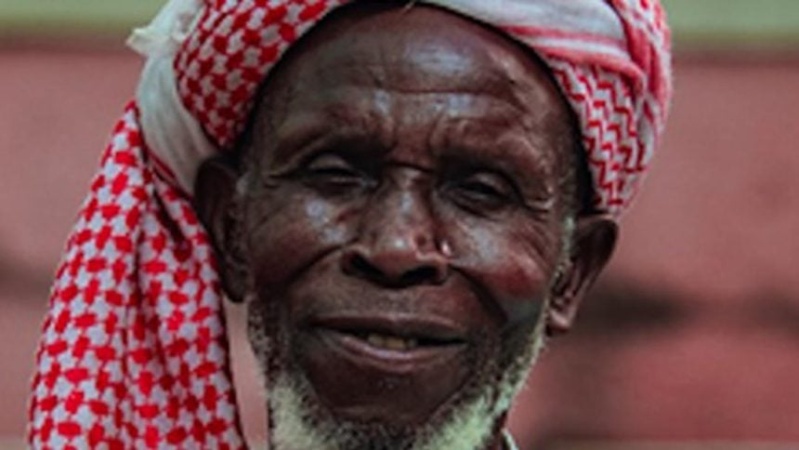
The Chief Imam of Yelwa, Gindin Akwati in Barkin Ladi, Plateau State, Nigeria, who saved the lives of over 250 Christians from armed attackers, Abubakar Abdullahi, has passed away. He died at the age of 90.

The late cleric became nationally and internationally known in June 2018, when armed attackers stormed communities in Barkin Ladi.

He opened his mosque and home to shelter hundreds of Christians, reportedly saving almost 300 lives, and refused to hand them over despite threats to his own life.

His act of bravery earned him widespread recognition, including the 2019 International Religious Freedom Award from the United States government.

Imam Abubakar Abdullahi, the Chief Imam of Yelwa, Gindin Akwati in Barkin Ladi, Plateau State, has passed away.

The statement added, “Governor Mutfwang observed that the loss comes at a time when the state greatly needed the guidance, wisdom, and unifying presence of Imam Abubakar Abdullahi.

“He urged the immediate family and the entire community to take solace in the knowledge that the late Imam lived a life of faith, compassion, and fairness, leaving behind a legacy of service and peaceful coexistence.”

EXPLAINER: Tax Reform Policy | Punch
0:09 / 1:01

The Plateau State Government, in a statement signed by the Director of Press and Public Affairs to the Governor, Gyang Bere, on Friday, mourned the late Imam

Governor Caleb Mutfwang described Imam Abdullahi’s death as “a monumental loss to his immediate family, his community, and Plateau State at large.”

According to the statement, the governor said the Imam’s life was distinguished by “unwavering commitment to peace, unity, and protection of the vulnerable, particularly women and children.”

Senegal beat Morocco in AFCON 2025 final

Afcon 2025 final: Senegal have 'concerns' over treatment in Morocco - BBC  Sport

Pape Gueye’s extra-time goal was enough to seal a second Africa Cup of Nations (Afcon) title for Senegal, after chaotic scenes at the end of normal time saw the West Africans walk off the pitch and Brahim Diaz miss a penalty for Morocco in the 24th minute of injury time.

The lengthy delay came after the spot kick was awarded via the intervention of the video assistant referee (VAR), sparking angry scenes on the touchline and in the crowd, with Senegal fans clashing with security after attempting to break on to the pitch.

After waiting so long to take his penalty, Diaz was under immense pressure, having been handed the chance to end his country’s 50-year wait to lift the Afcon trophy with essentially the final kick of the game, but his decision to chip the ball down the middle backfired horrendously as Edouard Mendy was able to stand his ground and collect in embarrassingly simple fashion.

After 90 minutes which were largely devoid of obvious goalscoring opportunities, the unsavoury scenes at the end were a poor advert for African football, especially with Morocco talking up this tournament as a test event for co-hosting the 2030 Fifa World Cup.

Chances did come at both ends after Gueye’s strike four minutes into extra time, but the closest Morocco came to an equaliser was when Nayef Aguerd powered a header against the bar from a corner.

And as the rain poured down in Rabat, Morocco’s dream of a first continental crown since 1976 was washed away in dramatic fashion.

(BBC)

Museveni wins Ugandan presidential election

Yoweri Museveni

Electoral Commission of Uganda (ECU) has officially declared President Yoweri Museveni the winner of the 2026 presidential election, extending his rule beyond three decades in a vote overshadowed by an internet blackout and restrictions on civil society organizations.

The Electoral Commission chairman, Simon Byabakama announced that Museveni received over 7.9 million votes, the highest among all contenders.

The commission confirmed that this total surpassed the required majority, securing more than half of all valid votes cast.

He declared: “Having obtained the highest number of votes in the election and the votes cast in his favour being more than 50 per cent of the total valid votes cast at the election, the Commission hereby declares Candidate Yoweri Museveni as the winner of the election.”

Official results show that 11.4 million Ugandans voted in Thursday’s election, representing a 52.5 per cent turnout of registered voters.

Museveni has been in power since 1986.

Photo: AFP

Why Fubara didn’t respond to gross misconduct allegations ―Gov’s aide

Sim Fubara, good student of Wike's school of effective ...

During an interview on Africa Independent Television (AIT) on Friday, Darlington Orji, Special Adviser on political affairs to Rivers State Governor Siminalayi Fubara, has said the governor did not respond to notice of gross misconduct against him by the state assembly because he has not been served with the notice.

The assembly, on 8 January, began impeachment proceedings against Governor Fubara and his Deputy, Ngọzi Odu, over alleged gross misconduct.

This is the third attempt by the lawmakers to impeach the Rivers governor since he was sworn into office in 2023.

Speaking during the programme, Orji said although Fubara heard of the impeachment move against him on the media and social media, he was yet to be served as of Friday.

“As I speak to you today, I can confirm that the Rivers State House of Assembly met on the 8 of January and up until this (Friday) morning, the Governor of Rivers, Siminalayi Fubara, has not received a copy of the impeachment notice or notice of gross misconduct,” he said.

The aide contended that the assembly had not complied with the processes of impeachment as provided by the relevant laws.

He further contended that various Nigerian courts, including the country’s Supreme Court had ruled that notice of impeachment and gross misconduct must be served “personally.”

“So, he (Fubara) has not been served. He would have responded because he has nothing to hide,” he stated, insisting that the governor did not violate any law to warrant impeachment.

The aide said governor Fubara travelled out of Nigeria when the Rivers assembly initiated the impeachment process.

Orji said he only saw a notice of the alleged gross misconduct against Mr Fubara on social media in which the governor was addressed as “madam” instead of “Sir”.

“We felt it was just a mere play because the governor, as far as I know, is a man. The governor will have no reason not to respond if he was properly addressed.

“But that’s not the only reason (for Fubara’s silence). They (lawmakers) have not served him,” he said.

He challenged the Speaker of the House, Martin Amaewhule, to show evidence that the lawmakers served the governor if they claimed to have done so.

In another development on Friday, the Rivers State High Court in Port Harcourt issued an interim injunction restraining the state assembly and the chief judge from proceeding with the impeachment move against the governor.

Orji expressed hope that, as lawmakers, the assembly members would not violate the court order.

“I don’t think they are going to flout it because they know the implications of flouting the order.

“But for me, I know that they’re honourable members and if truly they are honourable members, they will respect the opinion of the court,” the political aide said.

“They can approach the court and ask it to vacate the order.”

2027: Tinubu and Ndigbo, By Majeed Dahiru

Ahead of the 2027 presidential election, it appears the ruling All Progressives Congress (APC) may not be slowing down on the expansion of its sphere of influence into hitherto  hostile parts of Nigeria in its journey to possible one party dominance of the country. In addition to making successful inroad into the South South geo-political zone and greater parts of the Middle Belt, the South East geo-political zone is in the cusp of its political history, where a tectonic shift from its allegiance to the former ruling Peoples Democratic Party (PDP) to the APC is about to be actualised.

Since the advent of the Fourth Republic in 1999, Nigeria’s South-East geo-political, which is also the homeland of the Igbo, one of the three major ethnic groups in Nigeria, has been the major artery of support for the PDP. The support of Ndigbo for the PDP was such that every Onye Igbo was associated with the party as though their umbilical cords were tied together. Even when one of theirs and a prominent founding father of the PDP, former vice president Alex Ekueme lost the presidential nomination bid of the party to Olusegun Obasanjo, a Yoruba from Nigeria’s south west, Ndigbo still voted massively for the former ruling party in the 1999 presidential election. And despite the age long quest for a Nigerian president of Igbo extraction, Ndigbo voted massively for Umar Musa Yar’Adua, a northerner who was the presidential candidate of the PDP in 2027, against Odumegwu Ojukwu, a fellow Igbo man because in the estimation of most people of the South East, the Southern part of Nigeria had its turn in Obasanjo’s eight year rule and it was the turn of the North in compliance with the zoning and rotation principle of the party.

It was in keeping faith with the principles of zoning and rotation of presidential power between the North and North even when they weren’t direct beneficiaries yet, that then chairman of the PDP, Vincent Ogboluafor, an Igbo man from the south east declared unequivocally that the presidency of Nigeria remains in the north upon the death of former President Yar’Adua  one year to the end of his first four year tenure and warning ALL southerners in the party, including the sitting president Goodluck Jonathan to leave the stage for the 2011 presidential race for ONLY northerners. Ogbuluafor was to pay a steep price for this most principled stand on behalf of northern Nigeria because unbeknownst to him, President Jonathan, had the ambition to run against the principle of zoning. For standing for the principle of equity, justice and fairness for northern Nigeria, Vincent Ogbuluafor was forced out of office as party chairman and put on trial for trumped up charges of corruption.

Not done with their principled stand on the right direction for the party presidential nomination, Ekwesilieze Nwodo,another Igbo man from the south east who succeeded Ogbuluafor as PDP national chairman, turned out to be an ally of former vice president Atiku Abubabakar, who was the northern consensus candidate to challenge President Jonathan for the 2011 presidential nominee. Accused of working stealthily for the emergence of Atiku Abubakar, Chairman Nwodo was unceremoniously eased out of office and since no Igbo man can be trusted to betray the party’s principles of zoning and rotation that clearly favoured the North, Bello Mohammed Haliru, a northerner was appointed chairman of PDP in his stead. It was Bello Haliru that conducted the primary election that threw up Goodluck Jonathan, a southerner at time the candidacy of the party was due north. Thus began the beginning of the end of the PDP. But despite their effort to save the party from itself, Ndigbo again voted massively for the PDP in the 2011 presidential election.

However, the best the South East and its people have to offer the PDP was yet to come until the party fell from power in 2015. Apparently seeing through Muhammadu Buhari’s incompetence, divisiveness, bigotry and unbridled clannishness, Nidigbo rejected APC twice in 2015 and 2019 with an uncommon tenacity of courage that strengthened the PDP in opposition. And in rejecting President Buhari a second time, Ndigbo did not do so for a fellow Igbo man. They voted against President Buhari in 2019 in favour of Atiku Abubakar, a Hausa speaking Fulani Muslim from northern Nigeria like the then president to underscore the point that in rejecting APC’s Muhammadu Buhari, it was about his personality not his region, religion or ethnicity.

Unfortunately, after a dedicated 24 years of unalloyed loyalty, faithfulness and commitment to the PDP, when it was expected that the party will reward this south east geo-political zone with the presidential candidacy of the party going into the 2023 presidential election, the northern wing of the party led by former vice president Atiku Abubakar though otherwise. In what may go down as a classic case of grand betrayal of trust, loyalty and friendship, the northern wing of the PDP, for which Ndigbo have made political life threatening sacrifices and massive support decided to violate the zoning of the presidency to the south in general and the south east geo-political zone in particular. To make matters worse, it was Atiku Abubakar, a man who had enjoyed massive support from Ndigbo in the course of his political journey in the Fourth Republic that will mindlessly lead the prevention of the emergence of a PDP presidential candidate of Igbo extraction by taking it for himself.

But as I warned on this page on the perils of violating zoning going into the 2023 presidential election, the PDP has found itself on the wrong side of history of Ndigbo in the 4th Republic. In an article titled ‘’That PDP May not Sail against the Wind’’, I warned; ‘’that the PDP may not sail against the strong wind of presidency that is blowing south, will be for the party to field a southern candidate as its presidential candidate in the 2023 presidential election. For the PDP, 2023 presidential election is not just about ‘winnability’’ but actual survival. While the APC is dominant in the north and the PDP’s strongest support base is in the south, the move by the APC to field a southern candidate in the 2023 presidential election will torpedo the PDP from the region if the party fields a northern candidate. And if the PDP goes ahead to sail against the wind in 2023 by fielding a northern candidate, the ship of the party will capsize, sink into oblivion as the party will lose in the north and in the south to the APC and go into extinction in post Buhari Nigeria’’.

True to this prediction, PDP’s Atiku Abubakar lost in the North to APC’s Bola Ahmed Tinubu, a southerner and LP’s Peter Obi, a southerner in the south. Again, the PDP is currently sinking into oblivion as it has lost influence in the south, which used to be its strongest support base. But most importantly, the sinking PDP is being TORPEDOED from the south particularly the South East by the APC, which threw up a Nigerian president of southern Nigeria extraction in the person of Ahmed Bola Tinubu.

Therefore, the strategic realignment of individuals, groups and geo-political interests, beginning with massive defections in the south east from the PDP into the APC, which eventually culminated into the recent South East regional endorsement of President Tinubu and adoption of the APC as the mainstream political party of the region is simply a matter of cause and effect as previously predicted. Interestingly, President Tinubu, a grandmaster of establishment politics has also adopted the right approach of peaceful overture, reconciliation and inclusion despite losing massively in the region in the 2023 presidential election. So, the ‘’Izu Umunna’’ Enugu gathering of APC Chieftains, where an impressive array of Governors, federal law makers, federal government appointees and supporters of the ruling party collectively endorsed President Tinubu for a second term indeed marks a ‘’paradigm shift grounded in pragmatism’’ according to the host Governor Peter Mbah.

Credit: Majeed Dahiru


Obi, Kwankwaso’s intended 2027 ticket has Obasanjo’s input

Endorsement: Our Track Record Much More Than Obi's, Says NNPP's Idahosa •  Channels Television

Intended alliance between the 2023 presidential candidate of the Labour Party (LP), Mr. Peter Obi, and a former governor of Kano State, Rabiu Kwankwaso, for a joint 2027 presidential ticket has reached an advanced stage.

Punch reports that its finding revealed that both Obi and Kwankwaso have jointly set up a committee for the actualisation of the joint ticket under the African Democratic Congress.

According to the party official, Obasanjo not only blessed Obi’s defection to the ADC, he also asked the former Anambra State governor to work with Kwankwaso to secure the presidential and vice-presidential tickets of the party.

Obasanjo openly campaigned for Obi in 2023 and mobilised support for him across the country against the All Progressives Congress candidate, now President Bola Tinubu.

In an open letter dated January 1, 2023, he said: “None of the contestants is a saint, but when one compares their character, antecedents, understanding, knowledge, discipline and vitality they can bring to bear, and the great effort required to stay focused on the job—particularly looking at where the country is today—and with the experience on the job that I personally had, Peter Obi, as a mentee, has an edge.”

Kwankwaso, on the other hand, was appointed Minister of Defence by Obasanjo during his second term.

Currently, Atiku, Obi and a former Minister of Transportation, Rotimi Amaechi, are the three presidential aspirants in the ADC, while efforts to get Kwankwaso to join the party are ongoing.

Obi, before his defection to the ADC, had promised to serve a single term if elected President, after which Kwankwaso declared that he was ready to serve as vice-presidential candidate.

Though Kwankwaso has yet to join the ADC, Sunday PUNCH gathered that the proposed alliance between him and Obi has begun and was initiated by Obasanjo.

A top ADC source told one of our correspondents that the former president had also been connecting Obi with some northern power brokers to ensure the alliance works out.

“We’re aware of the alliance, though Kwankwaso is not in our party yet. Former President Obasanjo is the one who connected the two of them (Obi and Kwankwaso), and he is committed to their alliance.

“The former president believes in Obi and has been speaking with some northern leaders on the need for them to see reason in the alliance,” said the party official, who spoke on condition of anonymity.

Similarly, one of the leaders of Kwankwasiyya Movement confirmed Obasanjo’s involvement in the proposed alliance, saying the former president initiated the idea.

“The former President is involved. In fact, he mooted the idea, and we are happy to be on track,” the source, who spoke with Punch on condition of anonymity, said.

Punch further gathered that a committee had been put in place by both Obi and Kwankwaso to galvanise support within the ADC for the proposed joint ticket.

A credible source in Obi’s camp disclosed that the committee was set up about a month ago with a mandate to strategise on how to achieve the joint ticket.

“We’re no longer at the talking stage; we have moved ahead. A committee has been set up for the alliance and things are taking shape,” the source said.

Why I don’t own house or land in Abuja ―Peter Obi

Peter Obi: What I would do if coalition fail to give me presidential ticket  - Businessday NG

Presidential candidate of the Labour Party (LP) in the 2023 general elections, Mr Peter Obi, has declared that he has no house or landed property in Abuja, Nigeria.

The former governor of Anambra State, at a coffee hangout with KayhikersClub in Abuja, explained that his decision to avoid unnecessary headaches made him not to own properties in Abuja.

Obi said: “I don’t have a house in Abuja, I don’t have a land and I’m not preparing to have because I don’t need it.

“The more you have all these things the more headache you put on your head, for years I have never been sick, why would I? Because it’s not necessary.

“I was the chairman of our regulatory body, Security and Exchange Commission (SEC), the day I was announced, I arrived and the DG showed me a jeep, a Prado and they told me how much allowance I have for accommodation and I told the DG, ‘I just want to come for meetings here, I don’t need anything from you, any day you fix meeting, tell me I would come. I don’t want your sitting allowance, your car, and your house. He said it’s my entitlement, but I said whatever I’m entitled to, God has given me.’

“You can go and ask whether when Peter Obi was the chairman, did he collect anything?

“I was Chairman of Fidelity Bank and they told me that I’m entitled to Mercedes 500 or Range Rover, the bank is still there, go and ask them if I collected anything. I told them that I’m the chairman and whatever I need in my house I have, unless you want to bring a headache to yourself.

“I have enough, I don’t need to do give away but what I need I have.”

Nigeria beat Egypt in AFCON 2025 third place

Super Eagles held their nerve in Casablanca after a tense, goalless contest, with goalkeeper Stanley Nwabali emerging as the decisive figure in the shoot-out.

The victory means Nigeria have now won all eight third-place matches they have contested at the AFCON finals — a record unmatched by any nation in the competition’s history.

Nigeria had already entered the play-off with an extraordinary reputation, having claimed bronze on every previous occasion they reached this stage.

Saturday’s success over Egypt not only preserved that perfect run, but also increased Nigeria’s overall bronze-medal tally to nine, further distancing them from their continental rivals.

While Egypt arrived with their own proud history in third-place matches — having won three of their previous five — they were unable to disrupt Nigeria’s dominance in this particular fixture.

The Pharaohs were edged out in a shoot-out that underlined the Super Eagles’ composure and consistency in high-pressure situations.

Historically, AFCON third-place matches have produced drama, goals and controversy, but Nigeria’s relationship with the bronze medal has been defined by control and efficiency.

From narrow wins in 2002 and 2006, to decisive victories in 2010 and 2019, and now another shoot-out triumph in 2025, the Super Eagles have repeatedly found a way to finish tournaments on the podium.

Saturday’s result also capped another strong AFCON campaign for Nigeria, who reached the semi-finals with the tournament’s most potent attack before falling narrowly to hosts Morocco on penalties.

Ending Morocco 2025 with silverware provides tangible reward for their consistency across the competition.

For Egypt, the defeat brought a frustrating end to a campaign that promised much, particularly after their dramatic quarter-final win over Côte d’Ivoire.

However, their long wait for another bronze medal continues, with their last third-place appearance dating back more than four decades.

As the tournament now turns its attention to Sunday’s final between Morocco and Senegal, Nigeria once again leave the Africa Cup of Nations with history intact — reaffirmed as Africa’s undisputed kings of the bronze-medal match.

(CAFonline. Photo: CAFonline)

Star singer Davido in paternity row with alleged baby mama

ayo labinjo Archives - New Telegraph

Nigerian star singer, Davido has denied fathering a young girl, Anuoluwapo, whose mother, Ayotomide Labinjo, has repeatedly called for a DNA test to establish paternity. The dispute reignited on January 15, 2025, when an Instagram account managed by Ayo posted a heartfelt plea to Davido, alleging that years of bullying and ridicule at school had affected her daughter.

In the post, someone seemingly writing as Anuoluwapo, asked Davido to confirm her paternity. It reads: “I am respectfully asking Mr David Adeleke… for a DNA test to establish my identity. This test is between my dad and me. It is something I want. Please, sir, consider my request once you read this post.”

Davido responded on X (formerly Twitter), dismissing the claims and warning Ayotomide to stop contacting him. He wrote: “After 5 DNA tests… she dey crase… her and her mom better leave me the f**k alone and go find her papa.” He added that the tests were conducted after his father’s insistence, insisting all results were negative.

In response, Ayotomide countered, posting private chats between her daughter and Davido.

She claimed the pair met at a club in Ibadan, where she worked as a waitress, and alleged that the singer had ignored her after learning she was pregnant. She disputed Davido’s claims of multiple DNA tests, insisting only one was done at a lab and that the result was alledgedly falsified. She claimed that Davido gave money to the technician who conducted the test.

Asking for resolution, Ayotomide said she intends to involve the United States Embassy to supervise an independent DNA test, noting Davido’s US citizenship.

WP Twitter Auto Publish Powered By : XYZScripts.com